Building Educational Curricula for Social Repair Skills as a Foundation
Foundations are often tasked with addressing some of society’s most complex challenges that, when squeezed into numbers, act as modes of dispossession of knowledge, flattening people’s experiences and stories, and can reinforce harmful power and narrative dynamics. Topics like social vulnerability, inequity, resilience, and access are deeply human, context-dependent, and difficult to measure. Yet they are foundational to meaningful community work.
Creating educational curricula around these subjects isn’t just about sharing information. It’s about giving community members back the power to identify how people fall into vulnerability, with the language and tools to recognize markers that may leave people in danger of losing their testimonial autonomy.
Concepts like social vulnerability are shaped by overlapping systems economics, health, education, geography, policy, and lived experience. Without thoughtful framing, education on these topics can feel abstract, overwhelming, or disconnected from reality.
This is why we felt it so important to launch our Foundation Curriulum to educate community members and other foundations working in housing. Out goals with our first learning module launch is for you to
Understand what social vulnerability is — and what it is not
Recognize how vulnerability shows up differently across communities
Move beyond numbers to see people, stories, and systems
Develop a shared vocabulary for discussion and action
When building educational content for your foundation or community, it’s essential to meet learners where they are. Many people intuitively recognize vulnerability, but struggle to articulate it or identify its root causes.
Effective curricula begin by: Introducing clear, accessible definitions and acknowledging that vulnerability is dynamic, not fixed, but finding ways to measure it.
Data plays an important role in understanding social vulnerability — but numbers alone rarely tell the full story. Educational curricula should intentionally balance quantitative indicators with human context.
It may be important as a foundation to ask if you should also build an educational platform and explore the reasons why or why this is not a good fit for you. At 500Acres, we see awareness is a starting point — not the end goal. Curricula should equip learners with practical ways to identify, discuss, and respond to challenges within their own contexts.
Strong educational design encourages learners to:
Ask better questions about access, equity, and risk
Apply concepts ethically and responsibly
have resources to resist marginalization and attack
By investing in thoughtful, human-centered educational design, foundations can strengthen their work, empower their partners, and support communities in seeing both the data and the people behind it.
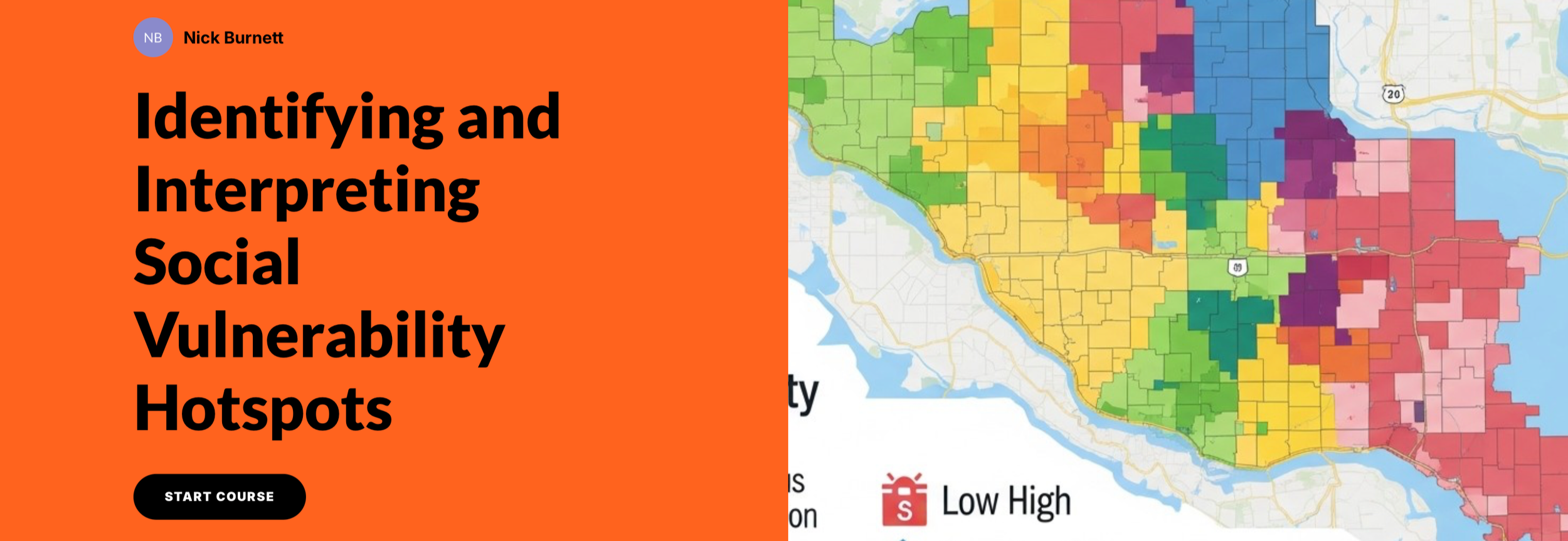
To explore how we’ve translated these principles into practice, visit our newest curriculum, Identifying and Interpreting Social Vulnerability Hotspots!